What is it and
who makes it?
The beginning of Rowe Pottery Works
Rowe Pottery Works was established in 1975 in
Cambridge, Wisconsin. In the late 1970s, as a two-person
pottery studio and shop, sales were made through art fairs and
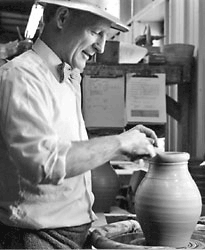
the studio showroom. Jim Rowe did the pottery production on
the potter's wheel and the pots were fired in the brick kiln
out behind the small workshop.
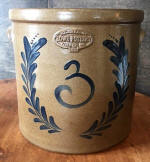
Interest in collecting antique cobalt blue decorated
salt glaze crocks and jugs was the inspiration to change the
studio's pottery product line in early 1980. Rowe Pottery went
from making Jim's personal pottery style of salt glaze to
museum quality reproductions of Early American crocks and
jugs. The value of early crockery was skyrocketing and quality
adaptations of the early designs were not available.
Rowe, making salt glaze pottery in his studio for
years, knew many of the secrets of this type of production.
The American country home decorating movement provided an
eager customer base to grow the studio into a viable business.
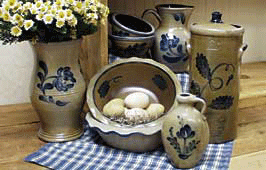
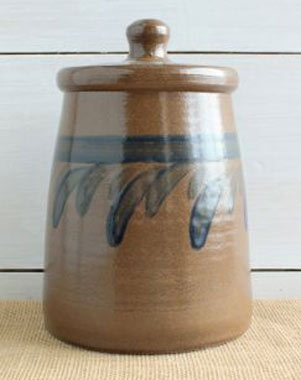
Today, Rowe Pottery Works makes several styles of pottery
including the ever-popular salt glaze stoneware in addition to
hand-wrought ironware home accessories which were added to the
company's product offerings in the late 1980s.
Learn how Rowe Pottery is made
Made by hand, our pottery represents the
work of potters and decorators. Learn about
their unique contributions to each piece.
 Exactly the same, but
different
Exactly the same, but
different
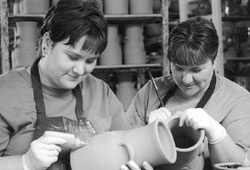
Decorators Holly Middleton and Heidi Rudnitski have been members of the Rowe Pottery Works family
for more than five years. While being twins often gets
them lots of attention, we appreciate the differences they
bring to their jobs. Just like our pottery, they appear
to be the same at first glance, but after closer inspection,
you can see the subtle differences in their
personalities.
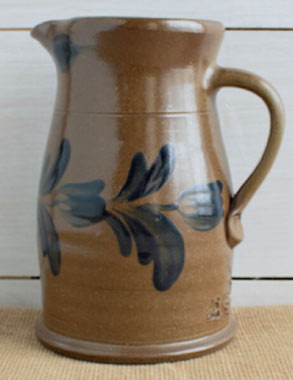
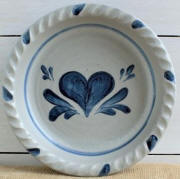
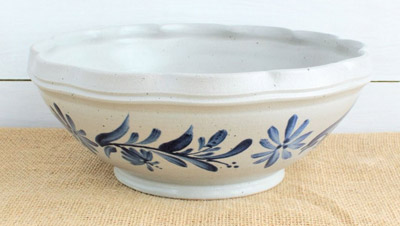
Each piece of pottery we craft at
Rowe Pottery Works is decorated to match the pattern before
it, but we take pride in the little differences. After
all, the differences are what make each of us
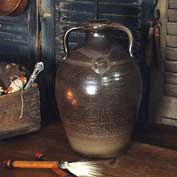
unique. Each piece of handmade Rowe Pottery includes
the potter's and decorator's mark, a signature in the form of
a small personal monogram they've used for years to identify
their work.




 - Click on Bernie







 Our potters come in all shapes and
sizes
Our potters come in all shapes and
sizes